Persian walnut Juglans regia
Common walnut (Juglans regia)
Persian walnut evaluation and selection project to obtain Northern Europe climate-adapted cultivars with good nut size, productive, and healthy trees. The goal is to select the best-adapted seedlings for local conditions.
Pests and diseases (gallery)
Trunk issues and variety (gallery)
WANTED: Seed source from the Carpathian mountains (Ukraine)
Project progress:
2020 first walnut trees were selected for seed source, and seeds were collected.
2021 first plants came out from the nursery. The first Latvian walnut tree inventory and tree selection were done,
2022 first plants were planted in the nut orchard, in situ seeding experiments in the forest,
2023 planted more trees were planted in the orchard and in various forest conditions. The second stage of Latvian tree inventory is done,
2023 seed dispersion to the wider public in Sweden and Finland,
2023 available seedlings for sale: Upisa Gen3 (LV), Kivik(SE), Simrishamn (SE), Torup (SE)
2025 We got Broadway seeds from Canada, and plants will be available in 2026
Walnuts (J.regia) in Latvia, a short history
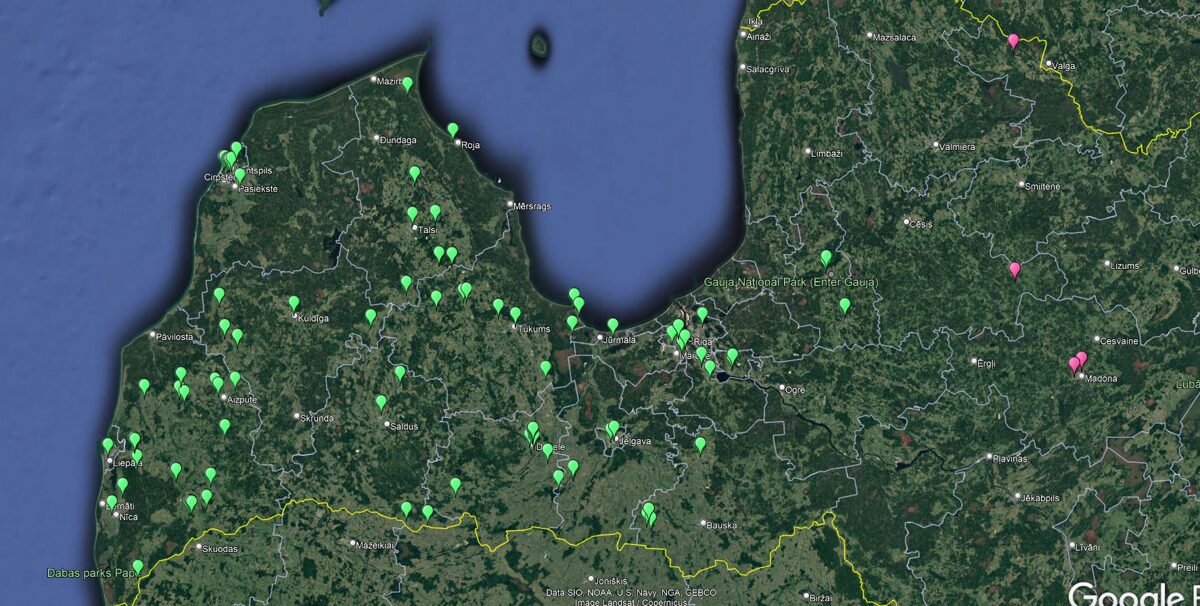
Actually, there are a lot of walnuts in Latvia. Most of trees are in the western part of the country, but I find more and more of them in the eastern part of Latvia with quite harsh winters. The oldest trees I guess, is older than 100 years. Some trees in quite old age have been frozen down to earth and then grew back.
- Most of trees are propagated by seed on site (up to the 1990s) or the youngest trees (from about 2000) have been bought from nurseries as seedlings. Seed origin: Ukraine, Moldova, Caucasus and middle Asia. Only few trees have western Europe origin.
- Oldest trees have experienced very cold temperatures during winters (-30 to -40C)
- Lot of the youngest trees (after 1991) come from Gunvaldis Vesmiņš (1931-2017) nursery. Second-generation Moldavian walnuts.
- Some local origin second-generation trees are very promising as potential variety for propagation by grafting. Today (2023) still no one graft walnuts in Latvia
- There are some selected walnut trees from Dobele horticulture institute/ Upitis third generation trees with very big nuts, but there are only two known trees in a private garden. Today no scientist continues this work there.
- Nut bearing started from y7 to y 20, an average number 12. In coastline areas vegetation season is shifted by two to three weeks. Nut harvest times vary fro the beginning of September till October
- No pests and decease that affect harvest. Younger trees suffer from late spring frosts. Main pests are crows and, in some places, squirrels.
- I could wish the better pruning and care for one leader. If there is a space, then trees grow very wide.
- There are a few walnut orchards with the aim of being commercial. The first one could start to have nut production in 2025 i small commercial scale.
- Today, in the plant market possible to buy some locally propagated walnuts from private persons (very small scale), imported plants from Poland.
- There are some small-scale experimental plantings with Moldavian-origin grafted walnuts.
- Almost all walnut trees grow on private properties and are not publicly accessible.
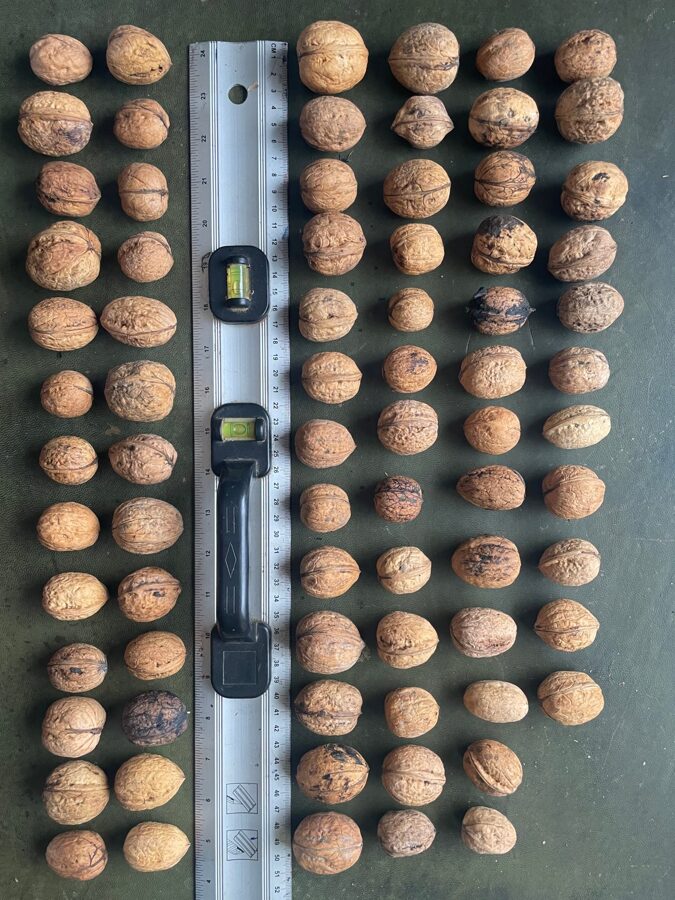
Nut selection, one nut from each tree
 Distribution map
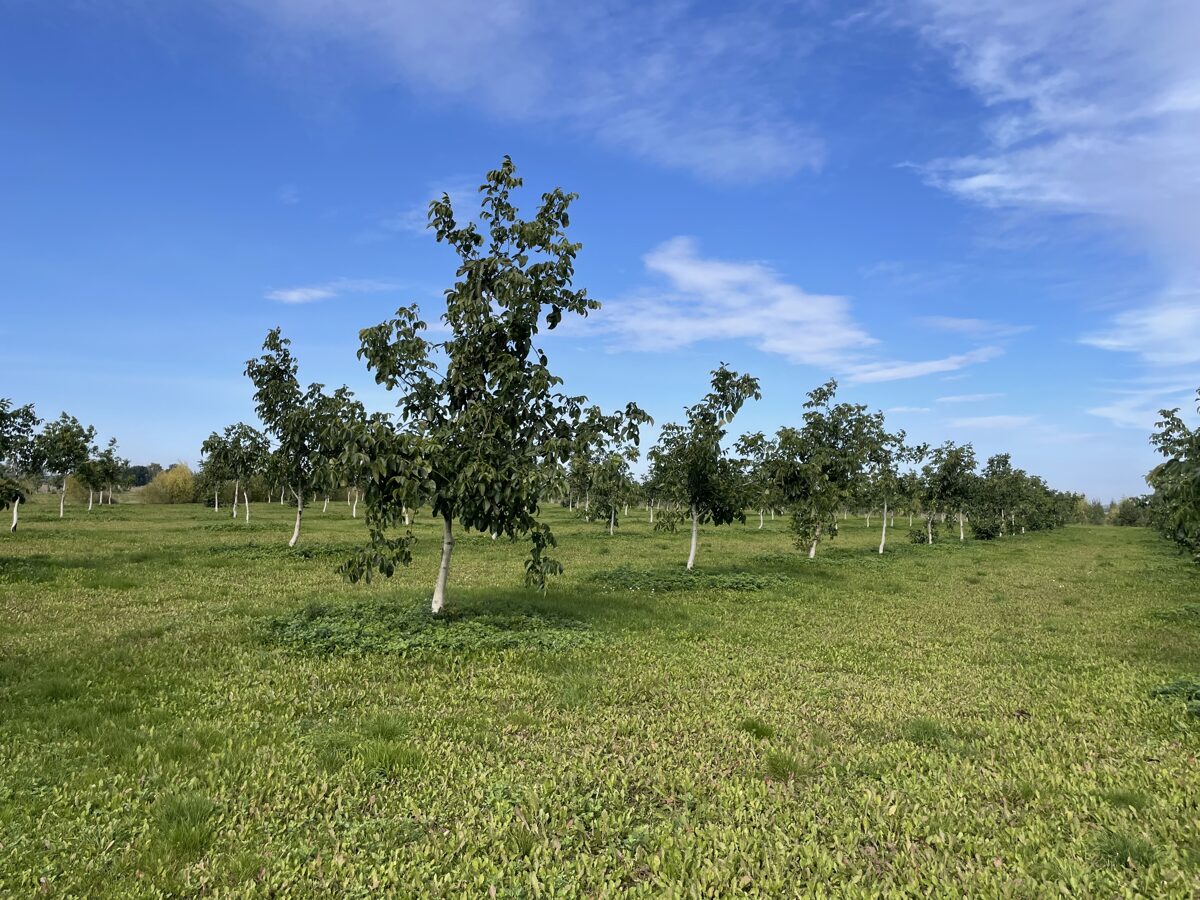
 Commercial walnut orchard Latvia